
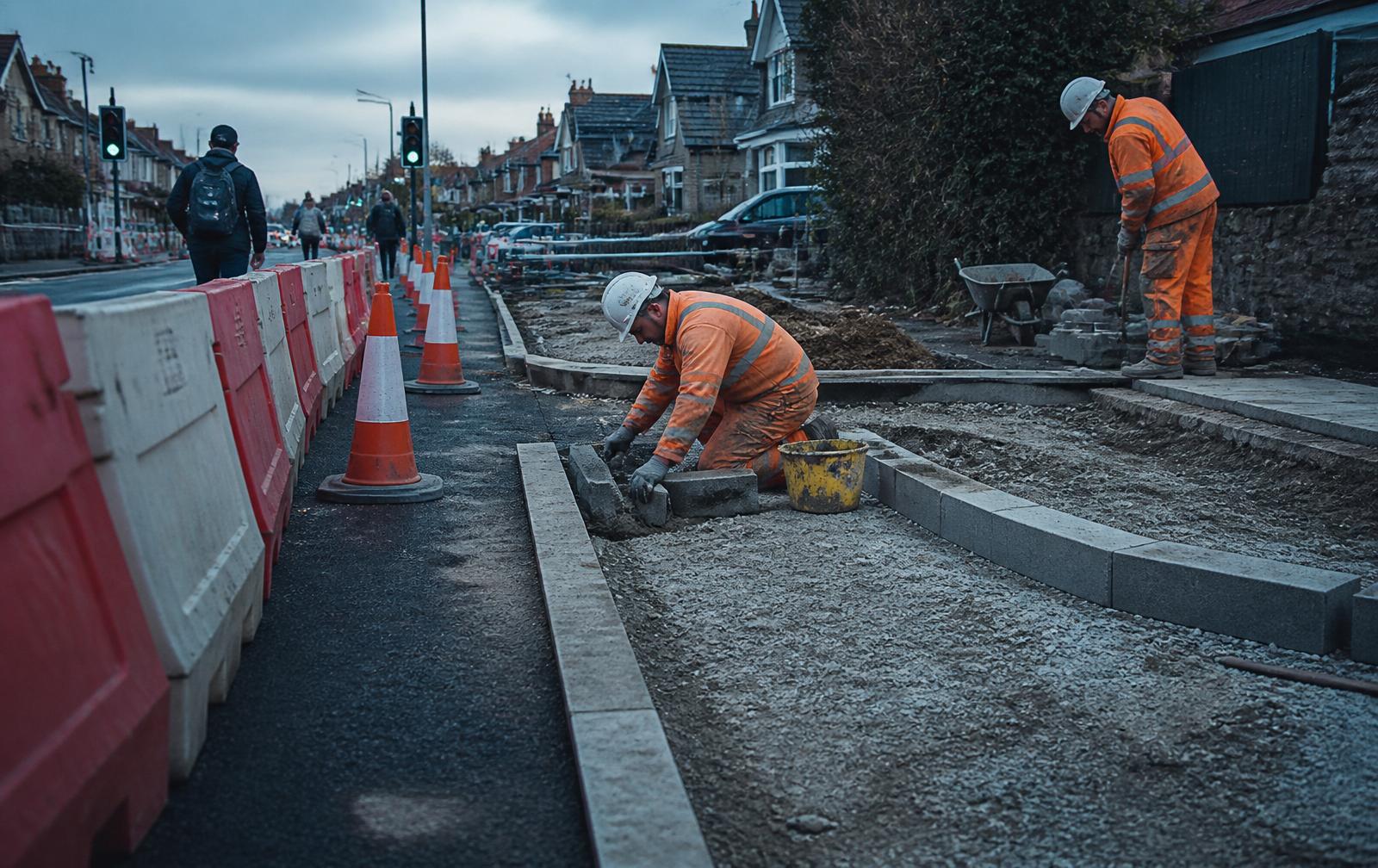
DROP KERB PERMITS // ONE INPUT, EVERY OUTPUT
Live — running real permitsKerbco is a drop kerb permit engine. One customer enquiry produces a priced quote, a paid permit application, a live Street Manager record, requested utility drawings, an assigned certified crew and a full compliance pack — from a single point of data entry. The only thing a human still does is place the traffic management.
01 / WHO IT'S FOR
Built for the people who dig the public footway.
- Drop kerb and vehicle crossing contractors running domestic work at volume
- Groundworks firms on council approved-contractor lists
- Driveway and paving specialists who lose jobs waiting on permits
- Any contractor who wants the permit admin to disappear
02 / CAPABILITIES
End to end.
Enquiry → instant quote
The customer fills in one form. Kerbco prices the crossing from width, footway build-up and council fee, and sends a real quote in minutes.
Accept → fee captured
Acceptance collects the permit application fee automatically. Payment is the trigger — nothing waits on someone remembering to chase it.
Street Manager + council reference
A Street Manager record is opened against the job reference and submitted to the council. The permit reference comes back and lands on the job automatically.
Utility drawings requested
Statutory undertaker drawings are requested the moment the reference exists — gas, water, electric and telecoms, before anyone puts a breaker in the footway.
Certified crew + compliance pack
Operative certification, health and safety, RAMS and reinstatement documentation are held in the platform and attached to the job without anyone opening a filing cabinet.
In-house mapping engine
Site mapping is built into Kerbco. The £16.90-per-job commercial map licence went in the bin — the maps are ours now.
03 / HOW IT WORKS
The operational flow.
01
One input
Customer submits the enquiry form. That is the entire manual data-entry burden for the whole job.
02
Quote & payment
Automated pricing goes out, the customer accepts, the permit fee is captured — the chain arms itself.
03
Permit & drawings
Street Manager account created, council notified, permit reference returned, utility drawings requested, crew and compliance pack assembled.
04
Roadplan (human step)
The operator draws the traffic management in Roadplan. Council gets the plan, the crew gets their sign install sheet, the job goes live.
04 / OUTCOMES
1
MANUAL STEP REMAINING
£50k
PIPELINE BUILT FROM ZERO
£16.90 → £0
MAP COST PER JOB
11
HANDOFFS REMOVED
05 / CASE STUDIES
In the field.
Kerbco
Drop kerb & vehicle crossing permits
CHALLENGE
Every enquiry kicked off the same eleven-step manual chain: hand-price the job, chase the fee, open a Street Manager account, wait on the council reference, request utility drawings, dig out crew certification, assemble health and safety, RAMS and reinstatement paperwork, and buy a £16.90 map.
SOLUTION
Forth built the whole chain as one automated sequence triggered by the enquiry form, with an in-house mapping engine replacing the paid licence and Roadplan kept deliberately manual for traffic management.
"I put the job in once. By the time I've made a coffee the quote is out, and once they accept, the permit, the drawings and the paperwork all handle themselves."
Operations, Kerbco
Drop kerb permit contractor, UK
06 / ARCHITECTURE
Under the hood.
TECHNOLOGY STACK
Frontend
React + TanStack Start (SSR)
Public enquiry form and operator console in one codebase, fast on a phone in a van.
Automation engine
Event-driven server functions
Each stage emits an event that arms the next — quote accepted fires payment, payment fires the permit application, reference fires the drawings request.
Database
Postgres + Row-Level Security
Per-contractor tenancy so multiple firms can run their own permits on the same engine.
Mapping
In-house tile & site-plan renderer
Replaces the third-party commercial map licence entirely — zero marginal cost per job.
Traffic management
Roadplan
Human-in-the-loop TM plan generation; council submission pack and crew install sheet from the same drawing.
Compliance vault
Certification & document store
Operative tickets, RAMS, health and safety and reinstatement specs versioned and auto-attached per job.
INTEGRATIONS
- Street ManagerSTREETWORKS
- Local authority permit desksCOUNCIL
- Statutory undertakersUTILITY DRAWINGS
- StripePAYMENTS
- RoadplanFORTH TOOL
- NoPrintFORTH PLATFORM
DEPLOYMENT & COMPLIANCE
DEPLOYMENT
Multi-tenant SaaS on UK edge regions. Run as Kerbco's own operating system, or licensed to other drop kerb contractors who want the same chain.
COMPLIANCE
NOTE — Enquiry, quote, permit and job entities exposed via REST + webhooks so a contractor's existing CRM or accounts stack can sit on top of the permit engine rather than beside it.
07 / FAQ
Common questions.
- What is a drop kerb permit?
- A drop kerb (vehicle crossing) permit is the local authority consent required to lower a section of public footway kerb so vehicles can cross from the road onto a private driveway. The work sits in the public highway, so it needs council approval, an approved contractor, utility drawings, a traffic management plan and a compliant reinstatement — it is not general building work.
- How long does drop kerb permit approval take?
- Councils typically take four to eight weeks from a complete application. Most of the delay is caused by incomplete submissions — missing utility drawings, out-of-date operative certification or a traffic management plan the council rejects. Kerbco assembles the full pack up front, which is where the time is actually won.
- How much does a dropped kerb cost in the UK?
- Most domestic vehicle crossings land between £1,200 and £3,500 depending on width, footway construction, whether utility apparatus needs protecting and the council's own permit fee. Kerbco prices the job automatically from the enquiry form, so the customer sees a real figure in minutes rather than waiting days for a site visit.
- Who needs utility drawings for a vehicle crossing?
- Every crossing that breaks the footway. Statutory undertaker drawings show where gas, water, electric and telecoms apparatus sits before anyone digs. Kerbco requests them automatically as soon as the permit reference is issued, so they arrive while the job is still being scheduled instead of the morning the crew turns up.
- Can other contractors use Kerbco to run their permits?
- Yes. Kerbco is built as a permit engine, not a single company's back office. Any drop kerb or vehicle crossing contractor can run their enquiries, quotes, Street Manager records, operative certification, health and safety packs and reinstatement documentation through it.
- How does Roadplan fit with Kerbco?
- Roadplan is the one deliberately manual step. Kerbco automates everything that is a lookup, a form or a record; Roadplan is where a human places the traffic management — sign positions, coning, pedestrian routes — because keeping the public safe on a live footway is a judgement call, not a generation task. The finished plan goes to the council and doubles as the crew's install sheet on site.
ONE INPUT, EVERY OUTPUT
See how the Kerbco chain works end to end — and whether the same engine can run your permits.